From Not Being Able to Tell Anything to Finally Being Understood
A mother’s lived experience with communication and autism
There was a time when my daughter had so much inside her, but no way to tell it. She had pain, discomfort, needs, and choices, but no words, no gestures, no clear expression. When something was wrong, she cried. She stimmed a lot. She looked stressed and overwhelmed. And I, as a mother, felt like I was choking from inside because I could not understand what my own child was going through.
When your child cannot tell you where it hurts or what she needs, you keep guessing all day. You keep thinking, is it pain, is it discomfort, is it hunger, is it emotional overload? That guessing is exhausting. It makes you feel helpless and suffocated. I hated that feeling — of not being able to help my own child.
She was like a bird in a cage. Fed every day, taken care of, loved deeply — but still trapped. Because food, roti, kapda, makan are not enough. Expression is also a basic need. Being able to say “I am in pain” or “I don’t want this” or “I need help” matters just as much.
For a long time, everyone told me to wait for speech. “Speech will come.” “Don’t introduce anything else.” But what about now? What about the present? Her speech was not there, but her stress was there every single day. Her overwhelm was real. Her emotional health was getting affected, and mine too.
When AAC Entered Our Lives and Gave Her a Way to Express
I reached a point where I had to ask myself one honest question — what is more important right now? Waiting for speech or my child’s happiness and emotional health?
That is when AAC for autism entered our lives. Not as a planned decision or a theory, but as a response to pain — hers and mine. My daughter needed a way to express herself now, not someday.
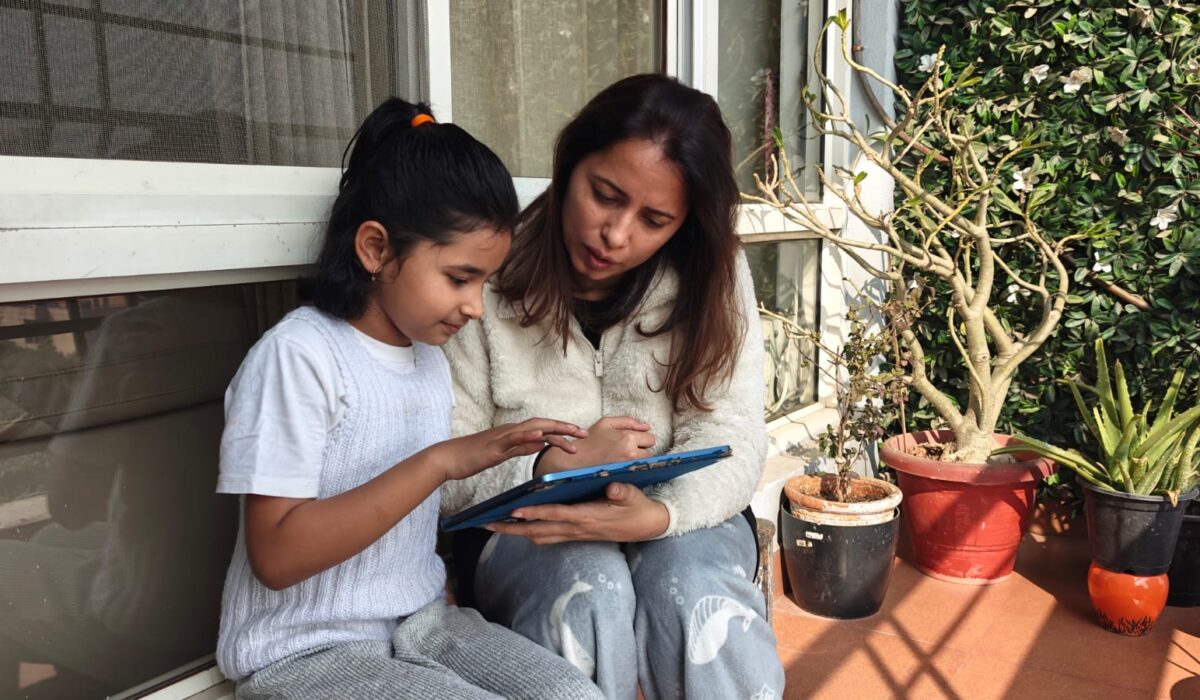
Slowly, things started changing. She could tell when she needed to go to the toilet. She could ask for help. She could tell me when her foot hurt, when her throat hurt, when her stomach felt uncomfortable, or when her nose was blocked. For the first time, her pain was not locked inside her body.
When she said “pain,” I knew what to do. I could take a pediatrician’s appointment. I could act instead of guessing. Even during doctor visits, she could express her pain, and suddenly people could understand her. Not just me — everyone.
Her stress reduced. The stimming that once came from frustration and overwhelm reduced too. Because when a child can express, the body does not need to scream anymore.
Giving her choices changed something very deep inside her. When she could say yes or no, when she could choose and then see that choice actually happening, she felt empowered. She felt seen. She felt respected.
The Confusion, Fear, and Worry Parents Carry About Using AAC
I know how confusing this decision feels because I lived it. I had all the fears too. What if she becomes dependent on it? What if speech never comes? What will people say? Even doctors questioned why we were using AAC when “speech might come later.”
But what people did not see was what my everyday life looked like.
My daughter was non-verbal, yes — but more than that, she had no gestures. She did not point. She did not show where it hurt. There were no actions to indicate discomfort, pain, or emotional distress. When something was wrong in her body, there was no way for her to tell me. There was only crying, intense stimming, and complete overwhelm.
That is when something became very clear to me.
This was not just about speech. This was about communication being missing at a very basic level. Even non-verbal communication was not there. And if a child cannot communicate through gestures, actions, or expressions, how can speech ever come?
That is when I truly understood that speech is not the starting point. Speech is the result. Communication comes before it.
In my daughter’s case, speech therapy alone was not translating into real-life expression at home because the foundation itself was missing. She did not yet have a way to express intent, pain, or choice. AAC supported that missing bridge. It helped her understand that she can express something, and that someone will respond.
I also changed as a mother during this time. Once I stopped waiting and started understanding what was actually missing, I became calmer. I stopped blaming myself. I stopped feeling lost. Knowing what my child feels gave me clarity and emotional relief.
Choosing this path was not easy. But continuing to wait felt even harder. I chose emotional health over fear. I chose my child’s present over an uncertain future. I left the rest to God and trusted that I was doing what felt right in my heart.
This journey was never about a device. It was about dignity. About allowing my child to express pain, emotions, and choices. AAC for autism did not take anything away from her. It gave her something she never had before — a voice.
Today, she feels empowered. I feel hopeful. We handle tough days better because communication exists. And I truly believe this — when a child feels understood, half the healing has already happened.
If you’re a parent raising a special child and feeling stressed, isolated, or unheard, you’re not alone. I offer a safe, judgment-free space to feel seen, express openly, and find clarity together. You’re welcome to connect with me. I can be reached either at the WhatsApp logo at the bottom or my contact details mentioned in this website. Thankyou for reading 🙂